

The client
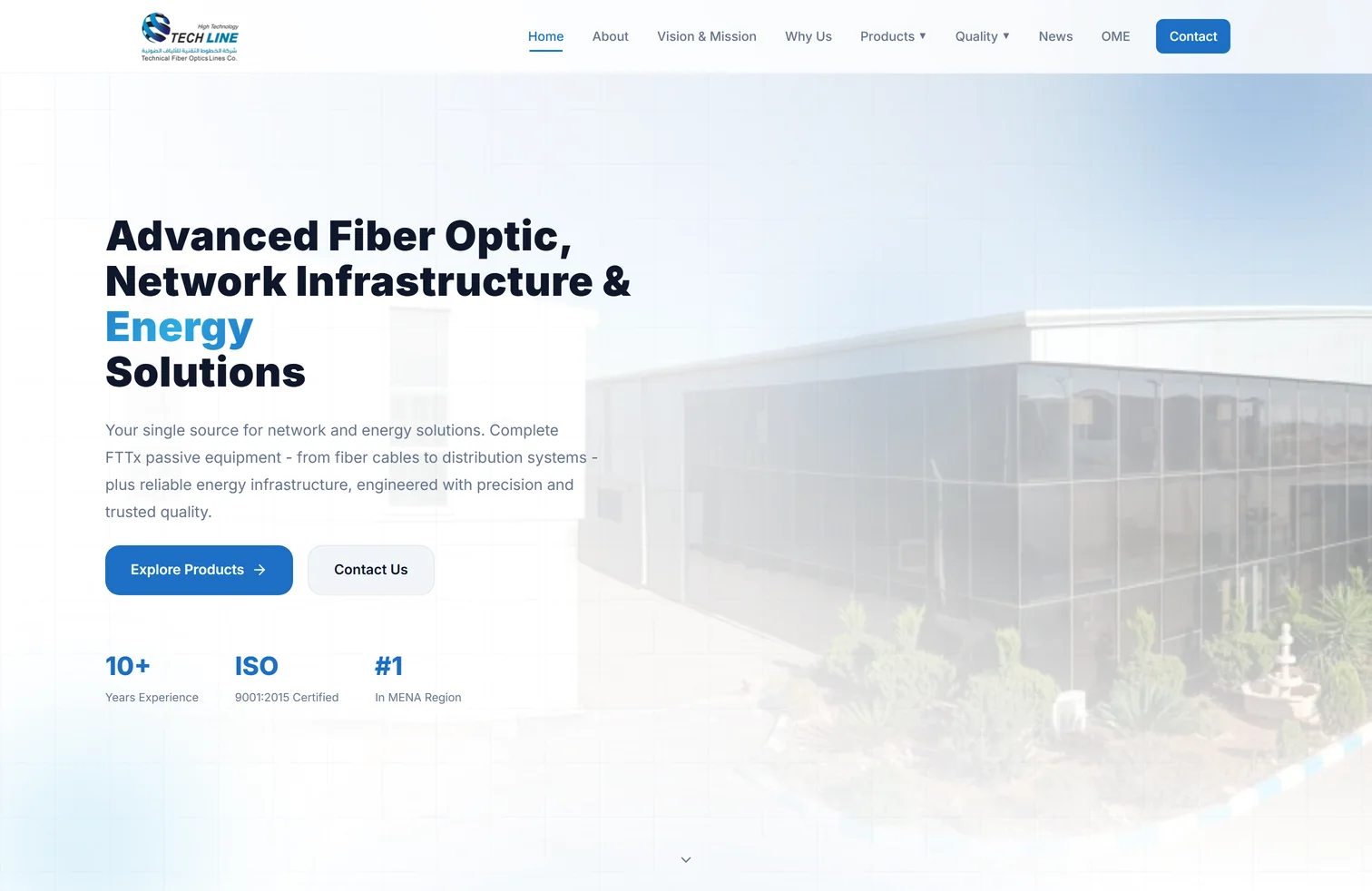
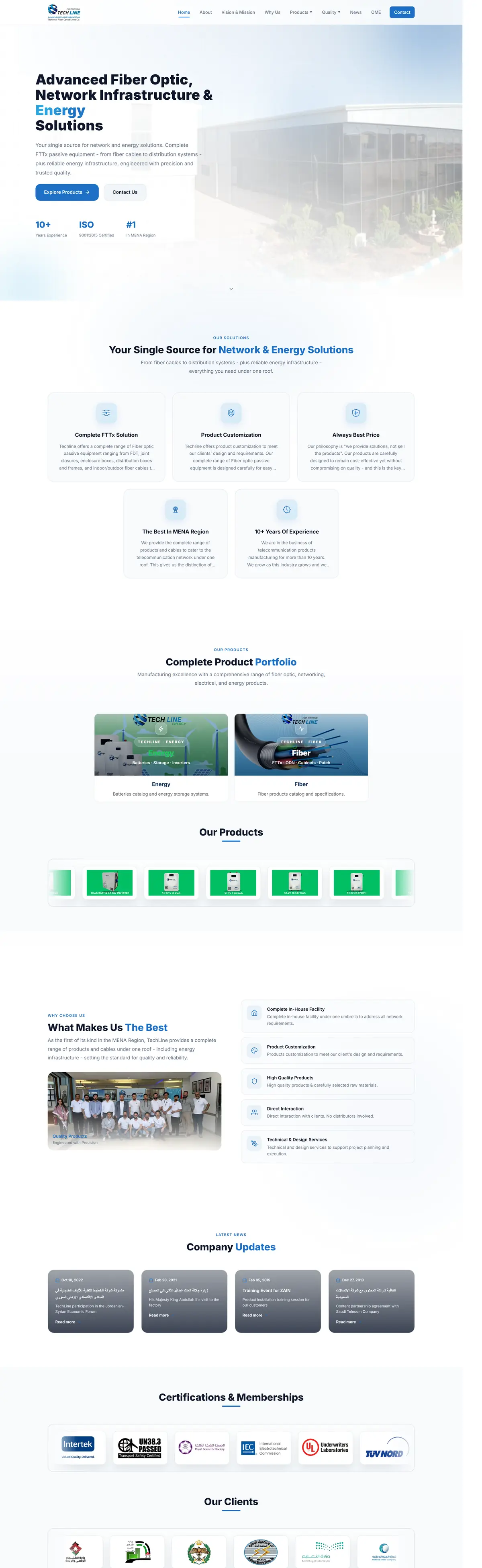
TechLine Factory manufactures fiber optic cable and supplies network infrastructure and energy systems in Jordan and the region.
What they needed
A clear catalogue for engineers and buyers, with technical specifications they can read on any device, and a simple way to request a quote.
What we built
A product catalogue with technical specification pages, a news section, a quote request form and a content management system the team updates themselves. We later built Masar, their field staff app.
Who reads a cable catalogue
Two kinds of visitor reach a site like this. Engineers and consultants arrive with a specification in mind and want to confirm that a product meets it. Buyers and contractors want to know what is available and how to ask for a price. The structure has to serve both without making either one dig.
How the catalogue is organised
A product catalogue for a manufacturer is easiest to use in three levels: product categories, product families inside each category, and a page for each product with its specifications. Giving each level its own address means an engineer can send a colleague a direct link to the exact product, and Google can show that page for a precise search.
Specifications that read on any device
Technical data belongs in real text tables, not in images. Text stays readable on a phone, can be copied into a tender or a submittal, and can be found by search. Wide tables need care on small screens. The usual fix is a table that scrolls sideways inside its own frame while the page stays still, with units in the column headings so every value is clear on its own.
From product page to quote request
A buyer who has found the right product should not have to explain it again. When the quote request sits one step away from each product, the sales team receives requests that already say what they are about.
A content system the team runs
New products, updated specifications and news are added by the TechLine team themselves, with no developer in the loop. In a catalogue, this works well when product pages are built from set fields rather than free text, so every new product looks like the others.
Why a manufacturer needs a news section
News shows buyers that the factory is active: new products, projects, exhibitions and certifications. Each news item is also a new page Google can find, linked to the products it mentions.
Product names people actually search
Engineers search with exact terms: the cable type, the number of fibres, the standard it meets. A product page whose title and main heading carry that real name and its key specification can appear for those precise searches, while a page titled with an internal code cannot. The same goes for categories: their names should match the words buyers use, not the factory's internal grouping.
Heavy catalogues, fast pages
A catalogue keeps growing: more products, more photos, more downloads. To stay fast on a phone, product photos should be compressed and sized for their place, images further down a page should load only when the visitor reaches them, and listing pages should show a short summary rather than every specification. See our notes on Core Web Vitals.
For buyers in Jordan and the region
TechLine supplies customers in Jordan and the region, so the site has to work for someone who has never visited the factory: clear information about the manufacturer, product data that stands on its own, and a quote request that works the same from any country.
What the client owns
As with every site we deliver, the code, the design files and the hosting access belong to the client at handover, with 30 days of fixes and help after launch. Care plans start at 80 JOD a month. See maintenance and support.
Links that travel on WhatsApp
Engineers and buyers share product links with colleagues, often on WhatsApp. When a page has its title, description and image set for sharing, the link shows a clear preview with the product name and photo instead of a bare address, and the person receiving it knows what they are opening.
What came next
After the website, TechLine asked us to build Masar, an internal Android app for attendance and field team tracking. If you run a factory or supply technical products, see our work for manufacturers or start from website design. Starting prices are on the pricing page.