



Saree3 builds custom software for companies in Jordan: web systems that run in the browser, the apps that go with them, and the integrations that connect them to the tools you already use. A first version of a custom system starts at 1,500 JOD. Scope, milestones and price are fixed in a written proposal before work starts.
Custom software makes sense when spreadsheets, WhatsApp groups and ready-made tools no longer fit the way your company works.
Two plain explainers help before a first call: what an ERP system is and what a CRM system does.
Good fit if
- Your team runs the work on spreadsheets, paper or WhatsApp groups, and things get lost
- No ready program fits how you work without changing it
- You need roles, approvals or reports across branches
Not a fit if
- A ready subscription already covers your process (it will cost less)
- You need the whole system live within a month
Systems we build
- Booking and reservation systems for clinics, venues, rentals and services, with calendars, reminders and payments
- Customer portals where clients log in to follow orders, requests, documents or invoices
- Internal dashboards that bring sales, operations and reports into one place
- Order and inventory systems for distributors, factories and shops with several branches
- Workforce and field team systems for attendance, tasks, inspections and daily reports
- Membership and loyalty systems with digital cards and rewards
- Marketplaces that connect customers with service providers
Custom software prices in Jordan
| Project | Typical scope | Price |
|---|---|---|
| First version of a system | One main workflow, user roles, an admin panel and reports | From 1,500 JOD |
| System with mobile apps | A web system plus iOS and Android apps for customers or staff | Priced by scope |
| Integration project | Connecting existing systems such as accounting, ERP or e-invoicing | Priced by scope |
Larger projects are split into milestones, each with its own delivery and payment. Care plans after launch are priced by the size of the system. Starting prices for every service are on the pricing page.
Custom software or a ready-made system?
Ready-made systems such as cloud accounting tools or ERP platforms are the right choice when your process matches the way they work. Custom software is the better choice when:
- Your workflow is what sets your company apart, and a ready-made tool would force you to change it
- You pay for many licences or modules but use a small part of them
- You need several tools to share data and they do not connect to each other
- Your customers or staff need an app built around your service
Often the best answer is both: keep a ready-made accounting or ERP system and build the custom part around it. The proposal says which option we recommend and why.
Integrations
- JoFotara, Jordan's national e-invoicing system
- Payment gateways for card payments
- SMS and WhatsApp messages for verification codes and notifications
- Accounting, ERP and CRM systems through their APIs
- Maps and location services
- Existing databases and spreadsheets, moved into the new system
What every system project includes
- Sessions with your team to map the workflow before design
- Screen designs reviewed with the people who will use the system
- User roles and permissions
- An admin panel and reports
- Testing with real data before launch
- Hosting on a cloud account in your company's name
- Automatic backups
- Training for the people who will use the system
- Full ownership of the source code and the data
How a software project runs
- Discovery We speak with the people who will use the system and write down the workflow, the users and the reports you need.
- Proposal A written proposal with the scope, milestones and fixed price. Simple systems get a proposal within one business day; larger systems may need a short discovery first.
- Design We design the main screens and review them with your team.
- Development in milestones Each milestone delivers working screens you can test.
- Testing and data migration We test with real data and move your existing records into the new system.
- Launch and training We launch the system, train your team and support them through the first weeks of use.
Systems and apps we built
- Masar: a workforce system for TechLine Factory. Staff clock in and out from company phones, the company sees where field teams are during working hours, and each day comes back as a written summary.
- Gourmet Club, InterContinental Jordan: a membership app connected to the hotel's existing membership system, with benefits redeemed by a code the outlet scans.
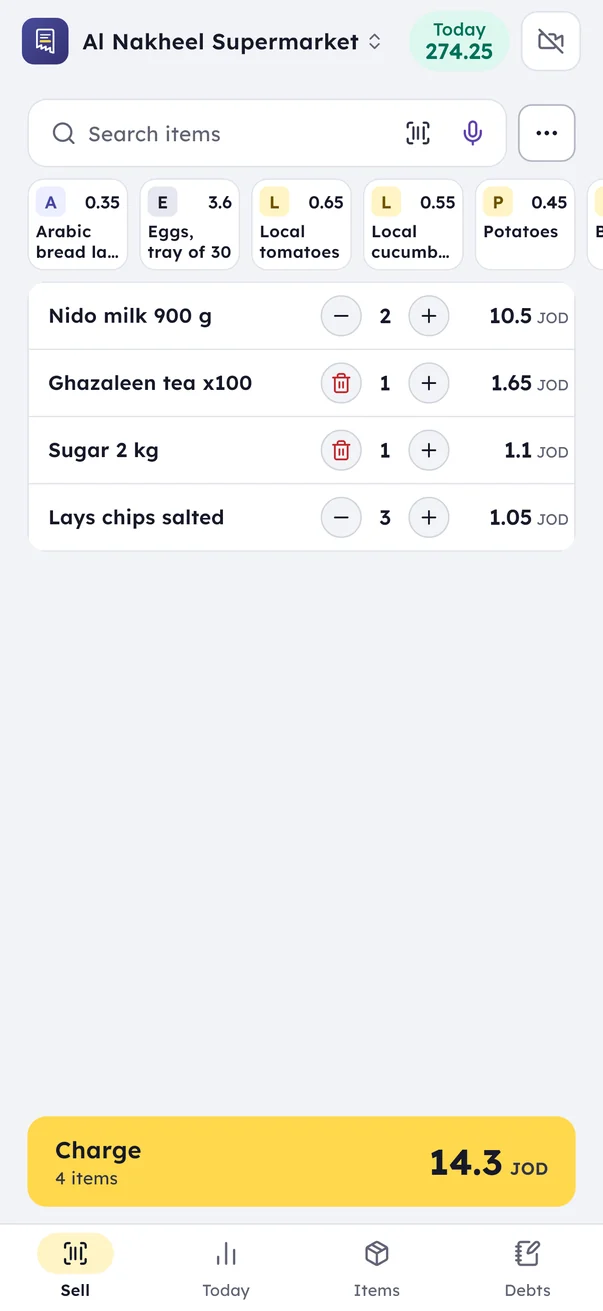
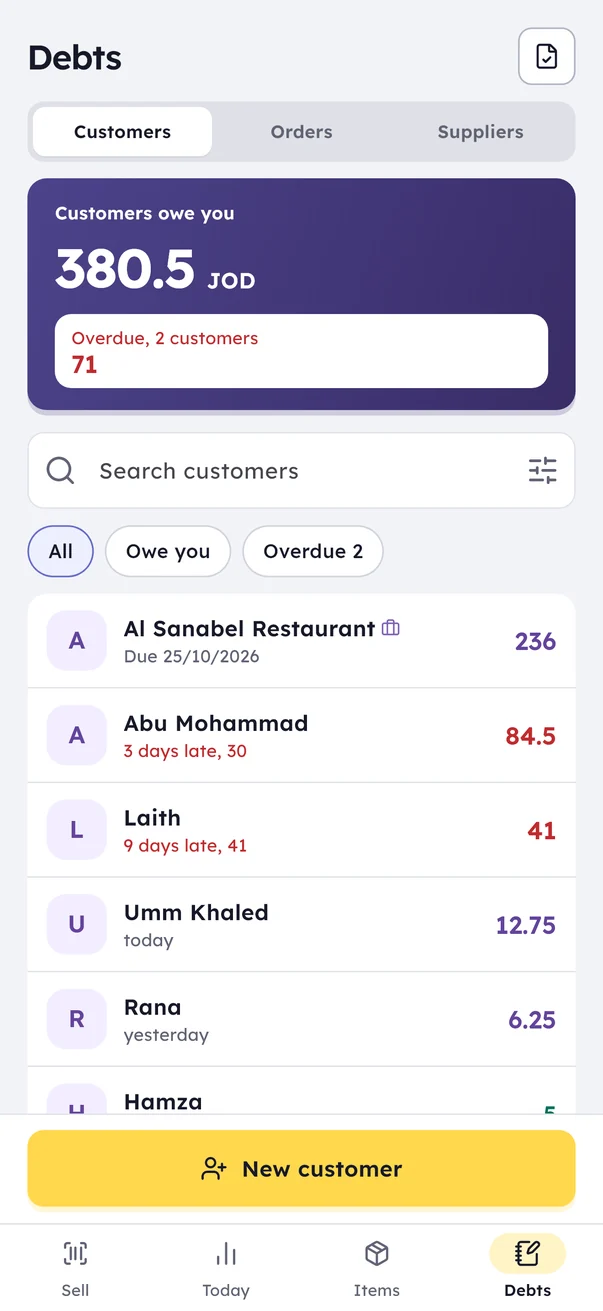
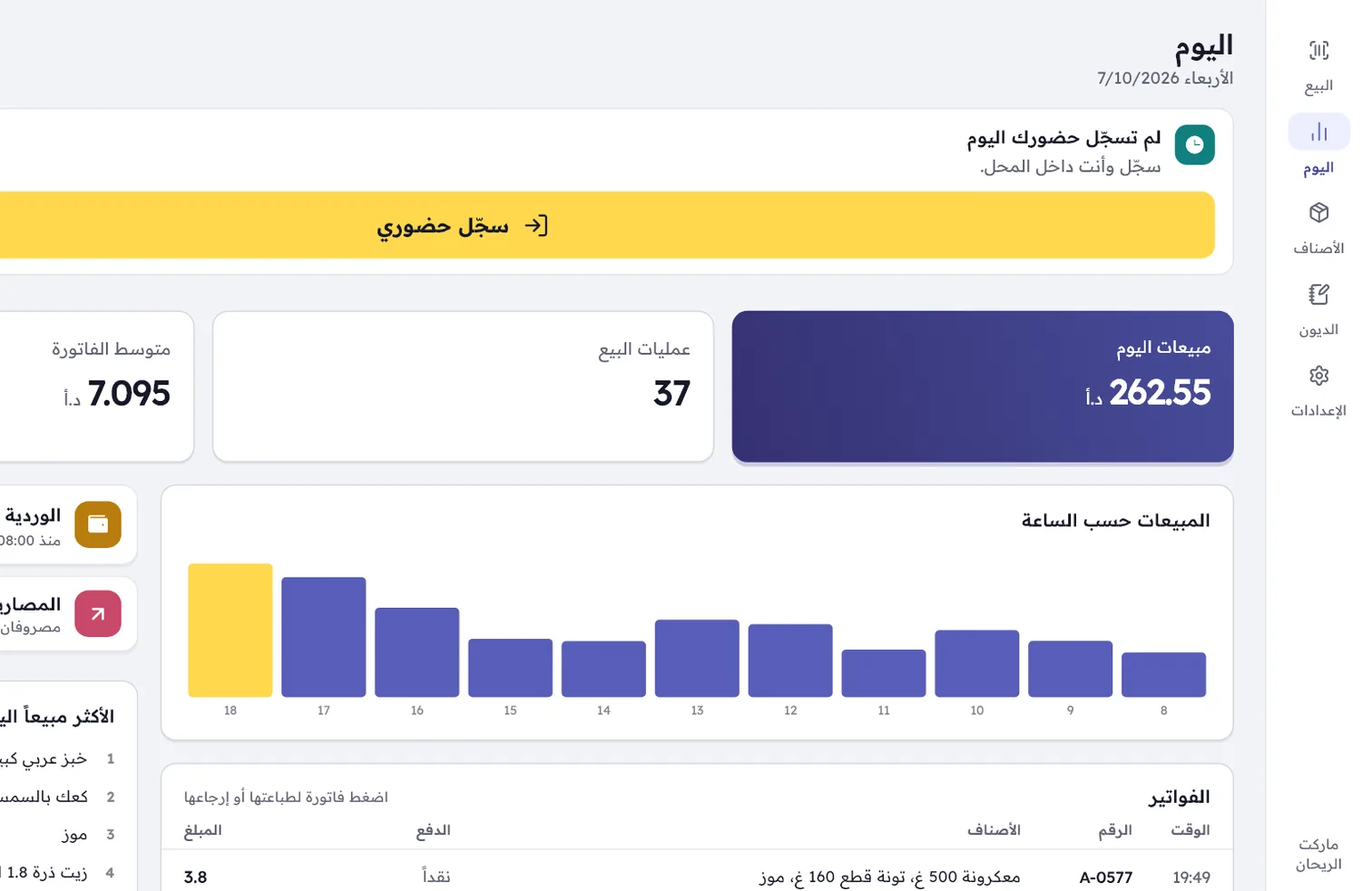
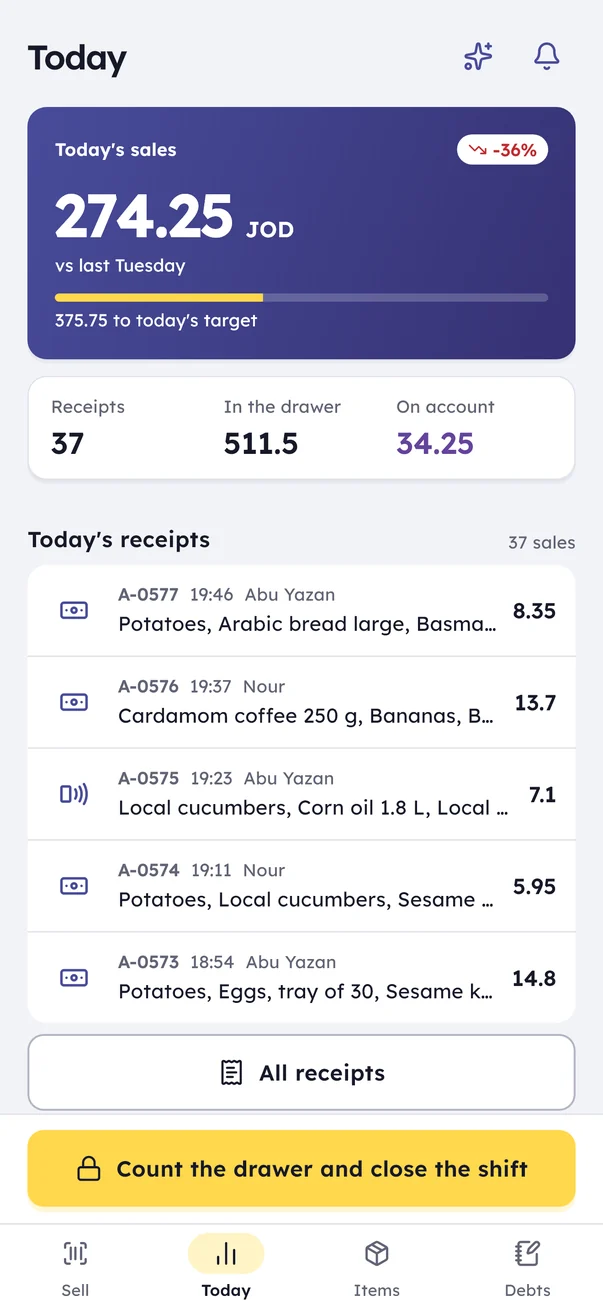
- Cash Dukkan: a point-of-sale and inventory system for shops, with invoicing, products and reports on iPhone and Android.
- Ejar El Dar, a rentals app we are building: a rental platform where landlords list apartments on a map and tenants filter, message owners and book viewings.
More projects are on the portfolio page.
Security and ownership
Each user sees only what their role allows. Data is stored on a cloud account in your company's name, with backups, and the source code is handed over after the final payment. If you ever change provider, your system and your data go with you.
Systems we shape around one sector:
- POS systems for restaurants and branches, with kitchen screens and JoFotara at the till.
- Clinic management systems, from the booking to the insurance invoice.
- School and training centre systems, with fees, attendance and marks.
- Car rental booking systems, with a fleet calendar and deposits.
Based in the capital? Our web development company in Amman page shows the integrations and the JoFotara work in detail.