What the system can include
- Selling. Barcodes, quick buttons for dishes, items priced by weight from a scale label, notes such as "no onions", and discounts that need a supervisor's approval.
- Payments. Cash, card, split bills, customer accounts, and returns that start from the original invoice.
- Offline mode. Each sale is saved on the device first and sent when the connection returns, with a check so nothing is submitted twice.
- Roles and shifts. Cashier, supervisor and manager rights, shift opening and closing, and a cash count at the end of each shift.
- Branches. One item list for every branch, stock per branch, transfers between branches, and prices that can differ from one branch to another.
- Restaurants. Tables, kitchen screens, station printers, and takeaway and delivery orders on the same till.
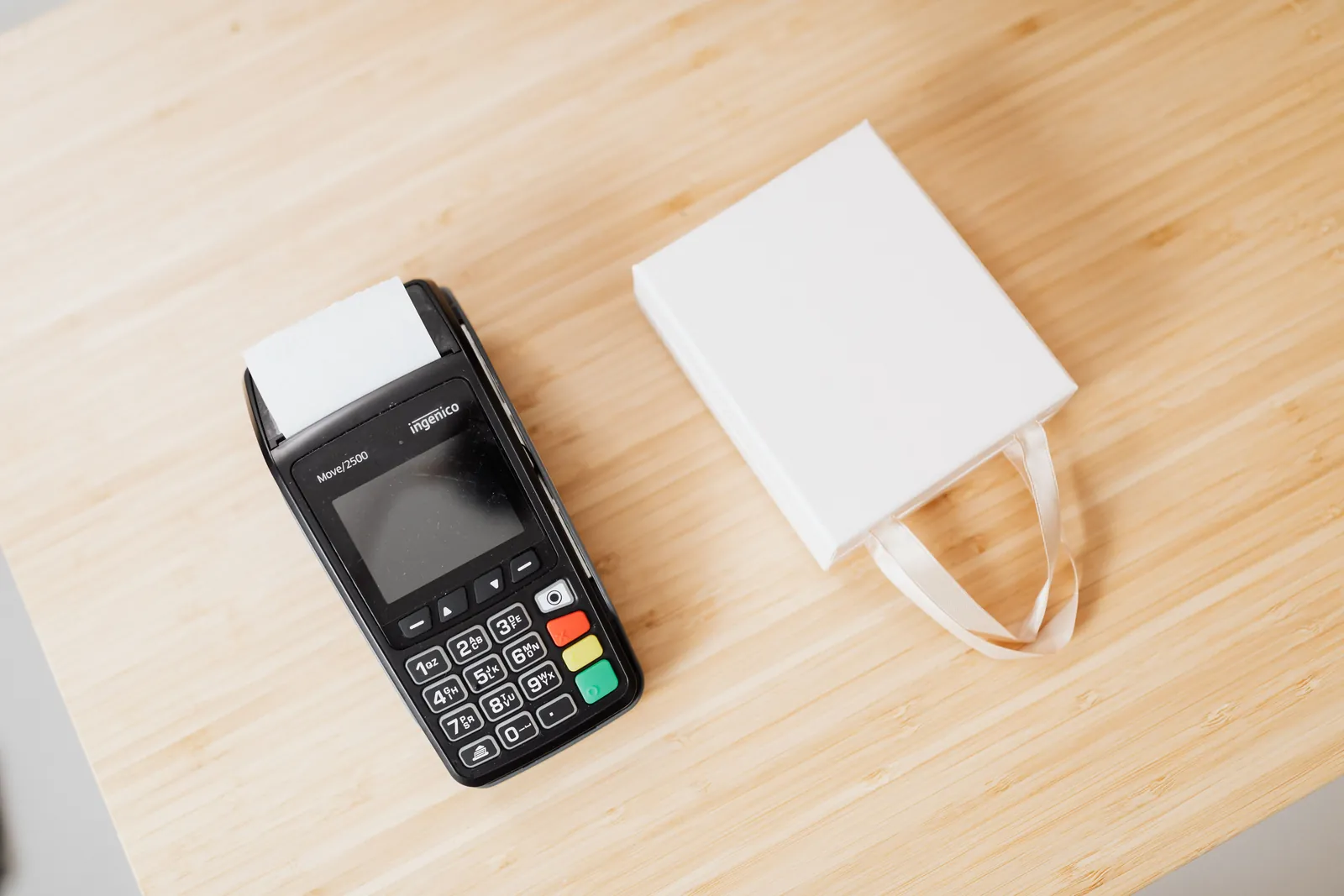
- Hardware. Receipt printers, barcode scanners, cash drawers and scales. We check the models you already own in the discovery call before we promise they work.
- Wholesale. Customer accounts with credit limits, statements and price lists.
- Reports. Sales by item, branch, shift and cashier, the items that sell most, voids and discounts.
Stock can live inside the POS, or the POS can sell from a full inventory and warehouse system when there are warehouses behind the branches. Pharmacies sell from stock tracked by batch and expiry date: see pharmacy systems.
POS for restaurants
A restaurant sells differently from a shop. The order starts at the table and finishes in the kitchen, and one bill may be split four ways. So a restaurant POS needs tables, a kitchen screen, a printer for each station, and takeaway and delivery orders on the same till. Ghalleh covers that for a small cafe. A custom system is for the restaurant whose kitchen, branches or delivery channels run on rules of their own. For the side your guests see, go to restaurant websites and menus.
JoFotara at the till
Since 1 April 2025, businesses in Jordan that are subject to income tax issue their invoices through JoFotara, the national e-invoicing system of the Income and Sales Tax Department. The exclusions are narrow. The list ISTD published in January 2025 (as reported by Assawsana, in Arabic) covers some small licensed shops with annual sales under 75,000 JOD. Popular restaurants under that limit are on it; most other restaurants are not. Our guide to who must issue e-invoices has the full list. Our JoFotara readiness check shows in six questions what your till needs.
Building JoFotara into Ghalleh showed us where it breaks at a till. Totals can differ by a fraction of a dinar when amounts are rounded too early. The invoice type has to follow the tax registration, so the cashier never chooses it. A return has to be a credit note against the original invoice. Sales made offline have to wait in a queue and go only once. Your system handles all four from its first version. If you already have a till and only need the connection, see JoFotara integration for an existing system.
A ready app or a custom POS
| What matters | A ready app such as Ghalleh | A custom POS |
|---|---|---|
| Cost | A plan you pay while you use it | From 1,500 JOD for a first version, then an optional care plan |
| Time to start | The same day | 4 to 8 weeks |
| How you work | You follow the app | The system follows you |
| Kitchen and tables | Tables, kitchen tickets, a kitchen screen and split bills, sized for a small cafe | As many stations, branches and order channels as you run |
| Branches and wholesale accounts | Whatever the app offers | Built to your rules |
| JoFotara | Built in | Built in |
| The code | Stays with the app's maker | Yours after the final payment |
If the ready column covers your business, take it. It costs less, and you can move to a custom system later.
Prices and what moves them
A custom POS starts from 1,500 JOD for a first version. The price moves with the number of branches and devices, restaurant features such as tables and kitchen screens, the hardware to connect, links to accounting or an online store, and how much data comes across from your old system. You get a written proposal with a fixed price within one business day, and you pay 50% to start and 50% at launch. There is no fee per user or per till. The system runs on a cloud account in your name, and the source code is yours after the final payment. Care plans after launch start from 180 JOD a year, and every starting price is on our pricing page.
How long it takes
A first version usually takes 4 to 8 weeks. We build in milestones, and you test each one with your real items and prices before the next one starts. We launch in one branch first, fix what the staff find in the first days, then roll out to the other branches. The first 30 days of fixes and help after launch are included.
Work behind this page
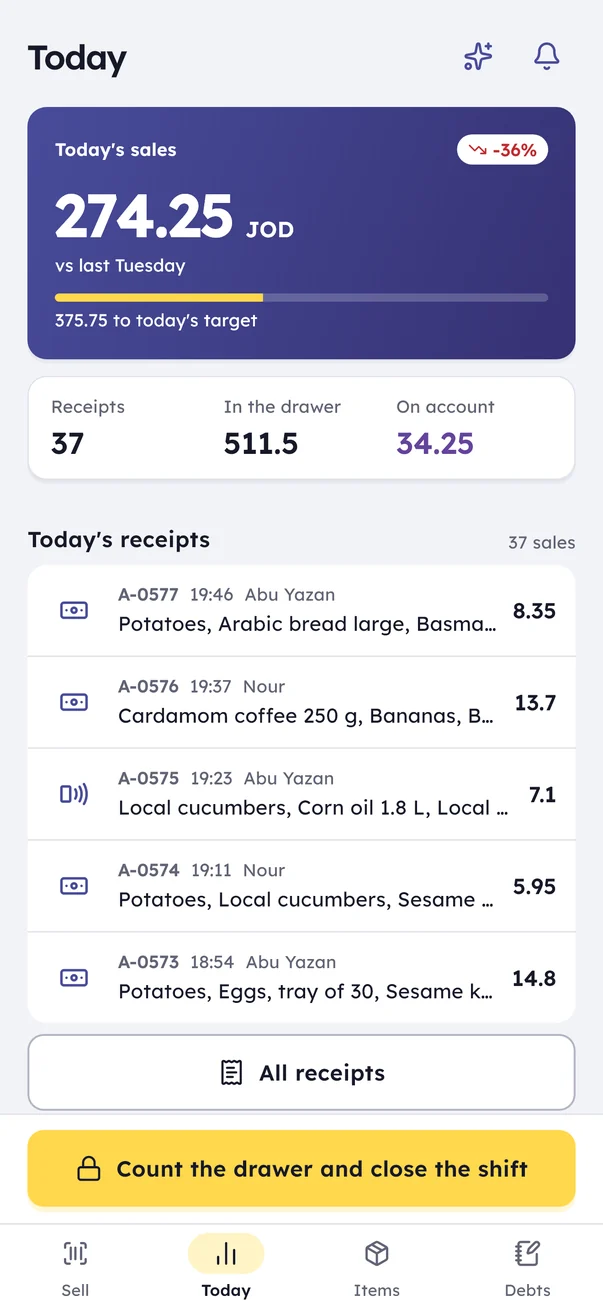
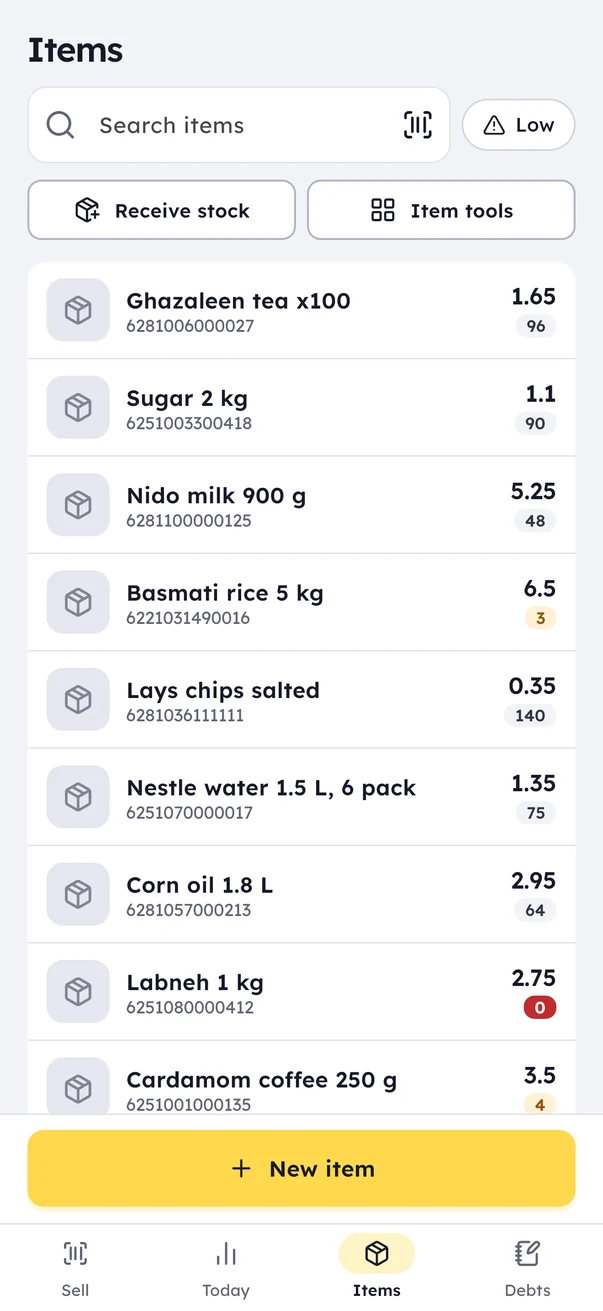
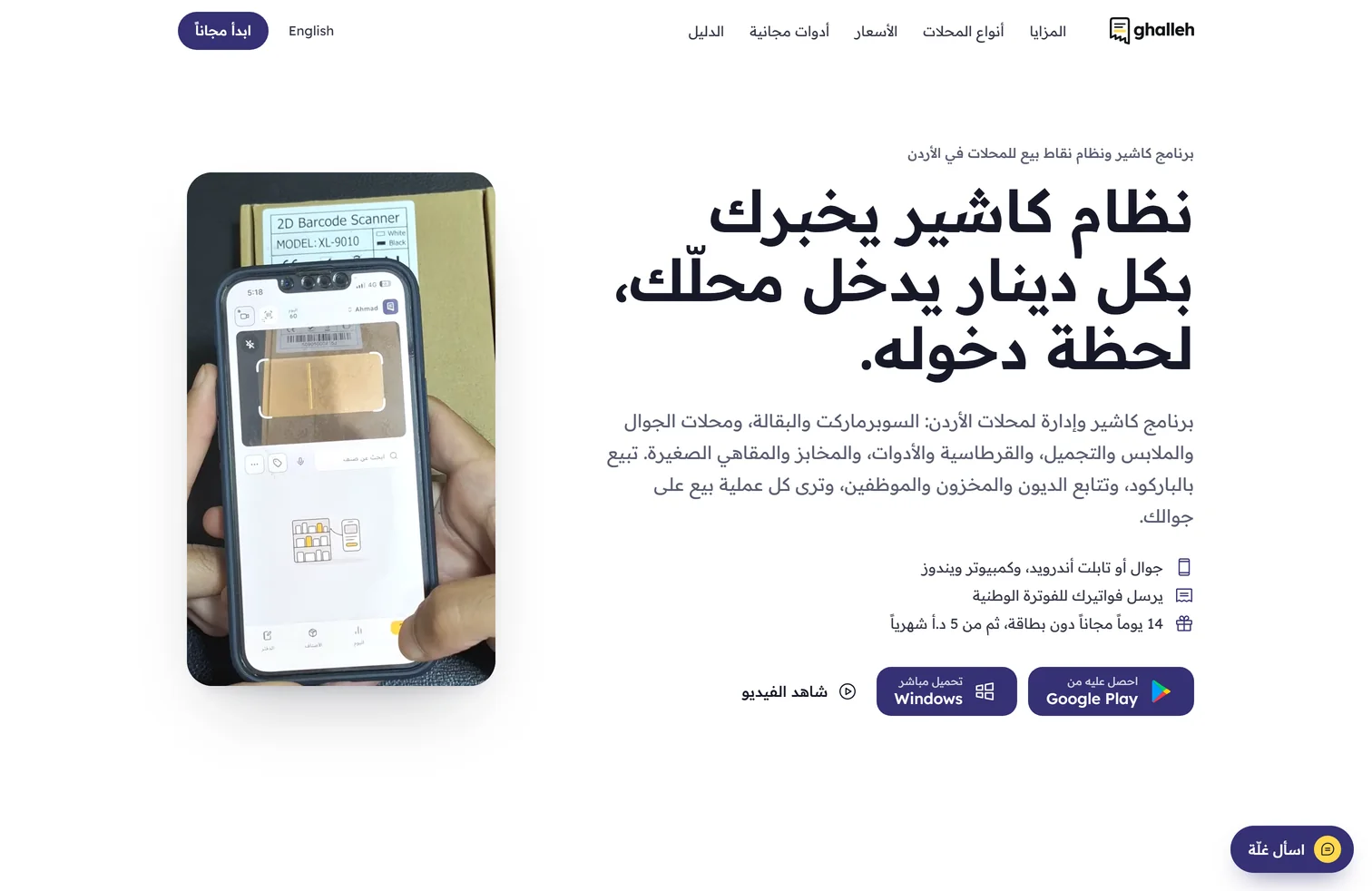
- Ghalleh, our POS app for small shops: Android, iPhone and Windows apps that stay in sync, selling without internet, customer debts, a back office, and JoFotara invoices with the QR code on the receipt.
- Cash Dukkan, a point of sale and stock app that turns a phone into a counter, prints receipts on a Bluetooth printer and issues JoFotara e-invoices.
A POS is often the first piece of a larger system. Our custom software page shows what we build around it.
A member card that the cashier scans for points is described on loyalty app development.