

Marketplaces
Multi-vendor marketplace development in Jordan
A marketplace website or app where many sellers list their products, buyers check out once, and you see what each seller sold and what you owe them.
Marketplace website from
1,500JOD
4 to 8 weeks
With apps for buyers and sellers: from 3,500 JOD, 6 to 10 weeks
The closest work
A custom store with one seller: CHI Jordan
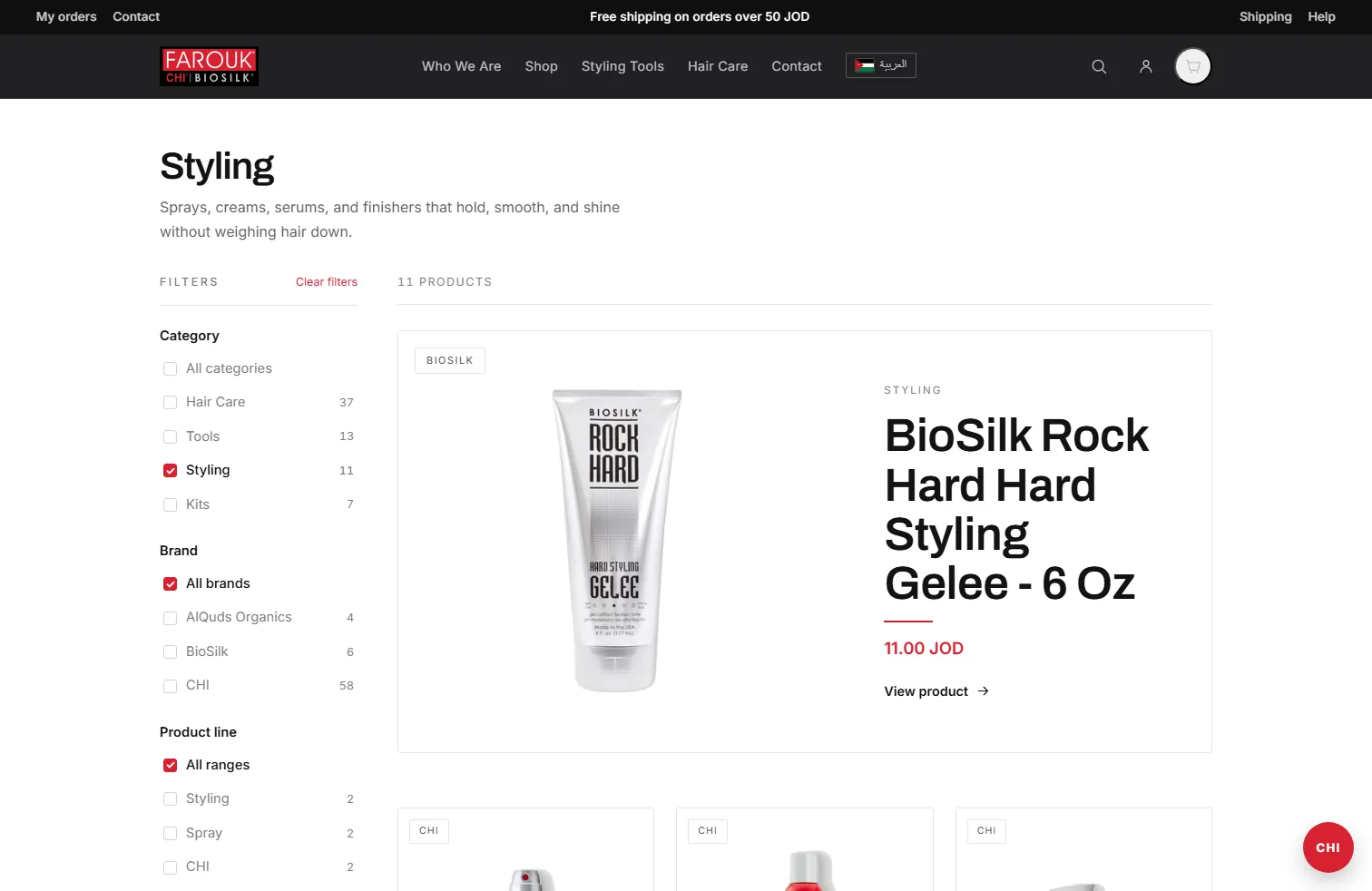
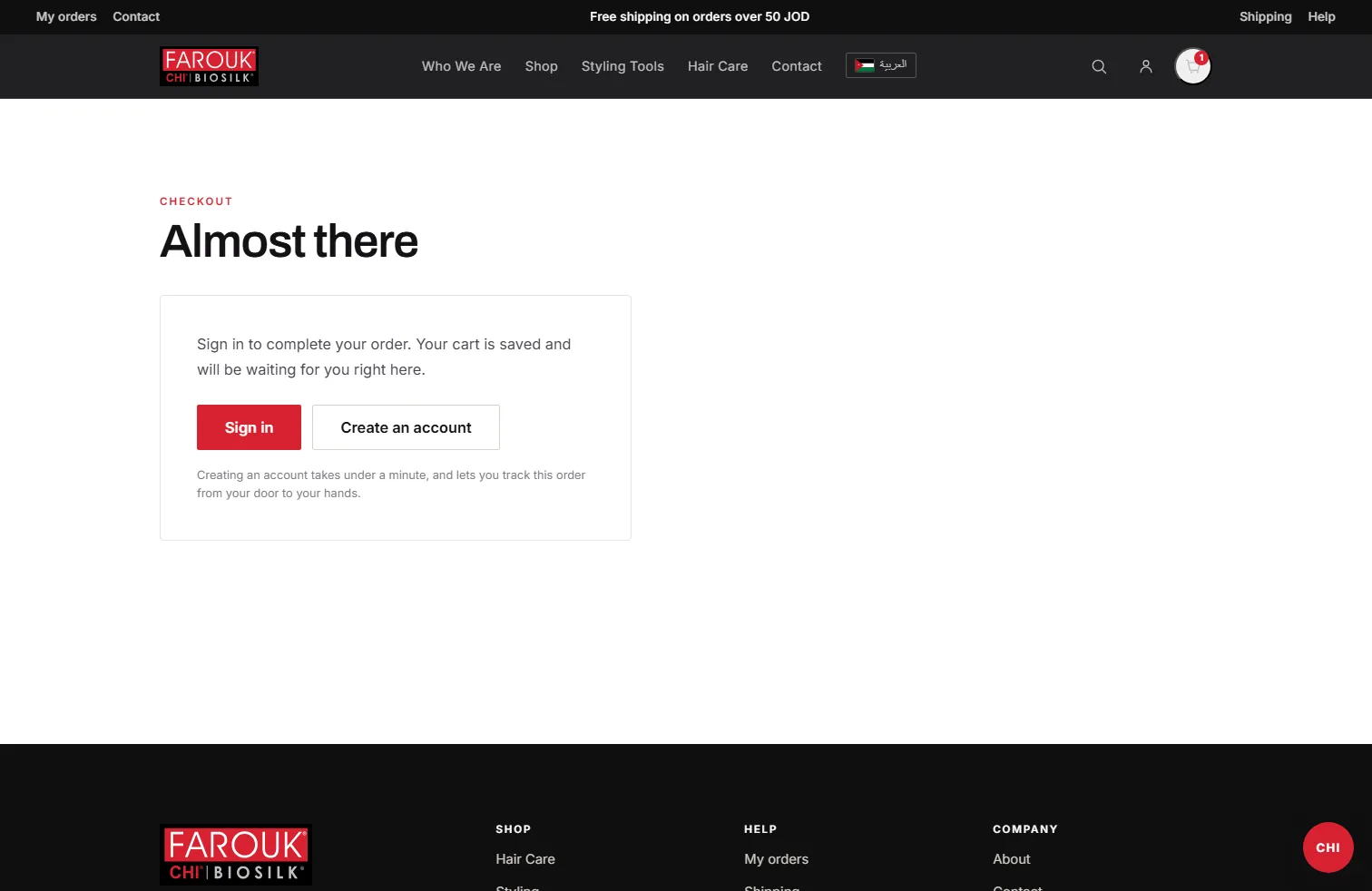
Real screens from the CHI Jordan store. A marketplace repeats these parts for every seller: a catalogue with a price and stock for each size, and a checkout with the delivery fee by region.

A multi-vendor marketplace is an online store where many sellers list their own products and buyers pay in one checkout, while you run the platform and earn a commission on each order or a subscription from each seller. Saree3 builds multi-vendor marketplaces in Jordan as websites and as apps for iPhone and Android, with a dashboard for every seller and one for you. A marketplace website starts from 1,500 JOD, and a marketplace with apps for buyers and sellers starts from 3,500 JOD.
Good fit if
- You already have sellers who want to sell through you, such as shops in one market, workshops, home businesses or suppliers in one trade.
- You want each seller to add products, change prices and follow orders without calling you.
- You earn from a commission on each order or a monthly fee from each seller, and you need a statement that shows what each seller is owed.
- You are ready to run the platform every day: approving sellers, answering buyers and settling with sellers.
Not a fit if
- You sell your own stock only. An online store starts from 500 JOD and is simpler to run.
- You have no sellers yet and want to test the idea. Start with a store that lists a few partners' products under your name, then move to a marketplace when sellers ask for their own accounts.
How is a marketplace different from an online store?
An online store has one seller, one stock count and one bank account. A marketplace has three sides: sellers who own the products, buyers who order them, and you, the operator, who owns the platform and sets its rules. That changes what has to be built: an account and a dashboard for every seller, orders split by seller, and every payment traced to the seller it belongs to, less your commission.
It also changes what you need on paper. In practice, selling online in Jordan needs a commercial registration, and on a marketplace that question applies to you and to each seller. Read our guide to the online store licence in Jordan, and agree with your accountant who issues the invoice to the buyer.
One order from two sellers, step by step
- 01The seller joins A seller applies with their shop details and documents. You approve the account before anything of theirs appears on the site.
- 02The products go live The seller adds products with photos, prices and stock. You can review each product before it is published, or let approved sellers publish on their own.
- 03The buyer checks out once The buyer adds products from two sellers to one cart, sees the delivery fee for each seller, then pays once by card or chooses cash on delivery.
- 04Each seller gets their part The order is split. Each seller sees only their own items, prepares them and marks them ready for the courier.
- 05The buyer follows it The buyer sees one order, with a status for each seller's parcel.
- 06You settle When the order is delivered, the system adds the sale to each seller's statement, less your commission. You pay sellers on the schedule you set.
What the marketplace can include
- Seller sign up and approval
- An application form, document uploads, and an approve or reject step, so only sellers you accept can list products.
- Seller dashboard
- Products, prices, stock, orders and a sales report, for that seller only.
- Catalogue review
- New and edited products wait for your approval, with shared categories so the same item is not listed under ten names.
- One cart, several sellers
- One checkout for the buyer, with delivery worked out for each seller and each area.
- Commission rules
- A commission for the whole platform, for one category or for one seller, or a fixed monthly fee, set from your dashboard.
- Payout statements
- For each seller: delivered orders, your commission, returns and the balance you owe them, ready to export for your accountant.
How do payments and seller payouts work?
Buyers pay the way they pay any store in Jordan: cash on delivery, or by card through a payment gateway contracted with your bank or a licensed payment provider. Our guide to payment gateways in Jordan compares the options. The money reaches your account or your courier first, not the sellers.
The marketplace keeps the record: which seller each paid item belongs to, your commission on it, and the balance you owe. You then pay sellers by bank transfer or CliQ on your own schedule, weekly or monthly, and mark the payout as paid. We do not promise that a gateway will split one payment between several bank accounts on its own. If your provider offers that, we connect it. Invoices follow the same record, and we can connect them to the national e-invoicing system through our JoFotara integration.
A ready plugin or a custom marketplace?
You do not always need a custom build on day one. WooCommerce has multi-vendor plugins and Shopify has marketplace apps that add seller accounts to a normal store.
| Question | Ready plugin or app | Custom marketplace |
|---|---|---|
| Cost to start | Lower. The store itself starts from 500 JOD, and the plugin adds its own fee and setup | From 1,500 JOD |
| Seller dashboard | The plugin's screens, as they come | Built around how your sellers work |
| Commission and payouts | The rules the plugin offers | Your rules and your statement |
| When it suits | Testing the idea with a few sellers | Many sellers, your own rules, apps later |
The limits of a plugin appear as you grow: sellers ask for reports it does not have, your commission rules get more detailed, or the site slows down under a large catalogue. We tell you which side you are on before you pay for either.
Prices and what moves them
Web system or portal from
1,500JOD
4 to 8 weeks
What moves the price
- Number of modules
- Users, roles and branches
- Integrations such as JoFotara
- Data we move from your old system
A marketplace is priced as a custom system: from 1,500 JOD for a marketplace website with seller dashboards and your admin dashboard, in 4 to 8 weeks. With apps for buyers and sellers on iPhone and Android it becomes a multi-role app, from 3,500 JOD, in 6 to 10 weeks. The price moves with the seller features, the commission rules, delivery for each seller, card payments, the apps and the products we load for the first sellers. You get a written proposal with a fixed price within one business day. Payment is 50% to start and 50% at launch, the first 30 days of fixes are included, and care plans start from 180 JOD a year.
Start with a few sellers
A marketplace with no sellers looks empty, and one with no buyers loses its sellers. So it is better to open small: one category, one city and a few sellers you know by name. We build the first version for that size, with seller approval, the catalogue, the checkout and the statements, and leave out what only a large platform needs.
The closest work we have shipped
We have not launched a marketplace yet. The closest work we have shipped is the CHI Jordan online store, a custom store with one seller. It has the parts a marketplace repeats for every seller: a catalogue with a price and a stock count for each size, a checkout with card or cash on delivery and a delivery fee by region, and a dashboard the client runs without a developer. The written proposal lists exactly what is new for yours.
If you are still choosing between a store and a marketplace, see online store design and our custom systems page.
Frequently asked questions
How much does a multi-vendor marketplace cost in Jordan?
At Saree3 a marketplace website with seller dashboards starts from 1,500 JOD, and a marketplace with apps for buyers and sellers starts from 3,500 JOD. The final price depends on the seller features, the commission rules, payments and apps, and it is fixed in a written proposal before work starts.
How long does it take to build a marketplace?
A first version of a marketplace website usually takes 4 to 8 weeks, with seller approval, the catalogue, the checkout and the seller statements. A marketplace with apps for buyers and sellers on iPhone and Android takes 6 to 10 weeks.
Can each seller manage their own products and orders?
Yes. Each seller signs in to their own dashboard, adds products, changes prices and stock, and follows their own orders. A seller never sees another seller's orders or sales, and you can review products before they are published.
How do I take my commission from sellers?
You set the commission from your dashboard, for the whole platform, for one category or for one seller, or you charge a fixed monthly fee. On every delivered order the system subtracts your commission and adds the rest to the seller's statement.
Can the marketplace pay sellers automatically?
The marketplace works out what each seller is owed, and you pay them by bank transfer or CliQ on your schedule and mark the payout as paid. Splitting one card payment between several bank accounts depends on your payment provider. If it offers that, we connect it.
Can I build a marketplace on WooCommerce or Shopify?
Yes, for a start. WooCommerce has multi-vendor plugins and Shopify has marketplace apps that add seller accounts to a normal store. They cost less to begin with, and their limits appear as sellers, reports and commission rules grow. A custom marketplace starts from 1,500 JOD.
Do sellers on my marketplace need a commercial registration?
In practice, anyone who sells regularly online in Jordan needs a commercial registration, and payment gateways and couriers ask for it. Who issues the invoice to the buyer, you or the seller, should be agreed with your accountant. This is general guidance, not legal advice.
Tell us what you are building
A written proposal with a fixed price and a clear scope.
Send it now and the written proposal reaches you within one business day.